解码赛马卡:阅读澳大利亚赛事表的初学者指南
发布于 十一月 8, 2025
Overview of the Australian race card layout and purpose
If you’re new to Australian racing, the first thing to master is how to read a race card australia. The race card gathers everything a punter needs: entries, barriers, weights, recent form, and even track notes. Think of it as a snapshot that tells you which horse might have the edge on a given day. Before we dive deeper, you might find our 新手赛马技巧 a useful starting point.
“A good race card is the foundation of any solid betting strategy.” – Veteran racing analyst
Breaking down the key columns: barrier, weight, age, sex, trainer/jockey
Understanding each column helps you filter the field quickly. Below is a quick reference:
- Barrier – The stall number; low numbers often favor sprinters on short tracks.
- Weight – Assigned weight each horse carries; heavierweights can signal a high‑class runner.
- Age – Young horses may improve rapidly, while older horses bring experience.
- Sex – Colts, fillies, geldings; some races give sex allowances.
- Trainer / Jockey – Track record of the trainer and jockey pairing; look for recent win percentages.
Understanding recent form symbols and what they reveal
Recent form uses a series of symbols that condense a horse’s last runs. This part of the race card guide is crucial for interpreting race form.
| Symbol | Meaning |
|---|---|
| 1 | Finished first |
| 2 | Finished second |
| F | Fell |
| U | Unseated rider |
| R | Ran out |
| - | Did not start |
When you see a string like “1‑2‑3‑U‑5”, it tells a story: the horse has been placing well but recently had an incident. Combine these clues with the upcoming race distance to gauge suitability.
“Form symbols are shorthand for a horse’s recent narrative; read them well, and you read the race before it starts.” – Racing commentator
Interpreting sectional times, pace figures, and track condition notes
Sectional times break the race into fractions (e.g., 400m, 800m) and reveal the pace. Faster early fractions suggest a front‑runner, while slower early splits may favor closers. Pace figures often accompany the australian race card tutorial and can be compared across the field.
A short checklist helps:
- Early fractions – Identify horses that liked the early pace.
- Middle fractions – Spot mid‑race stamina indicators.
- Final stretch – Look for horses with strong closing splits.
- Track condition notes – Soft, good, heavy; each affects speed differently. For deeper insight, see our 赛道状况:关键见解和描述.
Practical example: building a betting strategy from a live race card
Let’s walk through a live race card for a 1,200m sprint at Randwick.
- Scan barriers – Note low numbers (1‑4) and any known sprinters.
- Check weights – A horse carrying 55kg vs. a competitor at 57kg may have an advantage if form is similar.
- Read recent form – Look for a string with consecutive placings (e.g., “1‑1‑2‑‑”). Exclude horses with recent “F” or “U.”
- Analyse sectional times – Identify a horse with a sharp 400m split and a strong final 200m time, indicating a good turn of foot.
- Factor track condition – If the card notes “good‑to‑soft,” give preference to horses with proven performance on that surface.
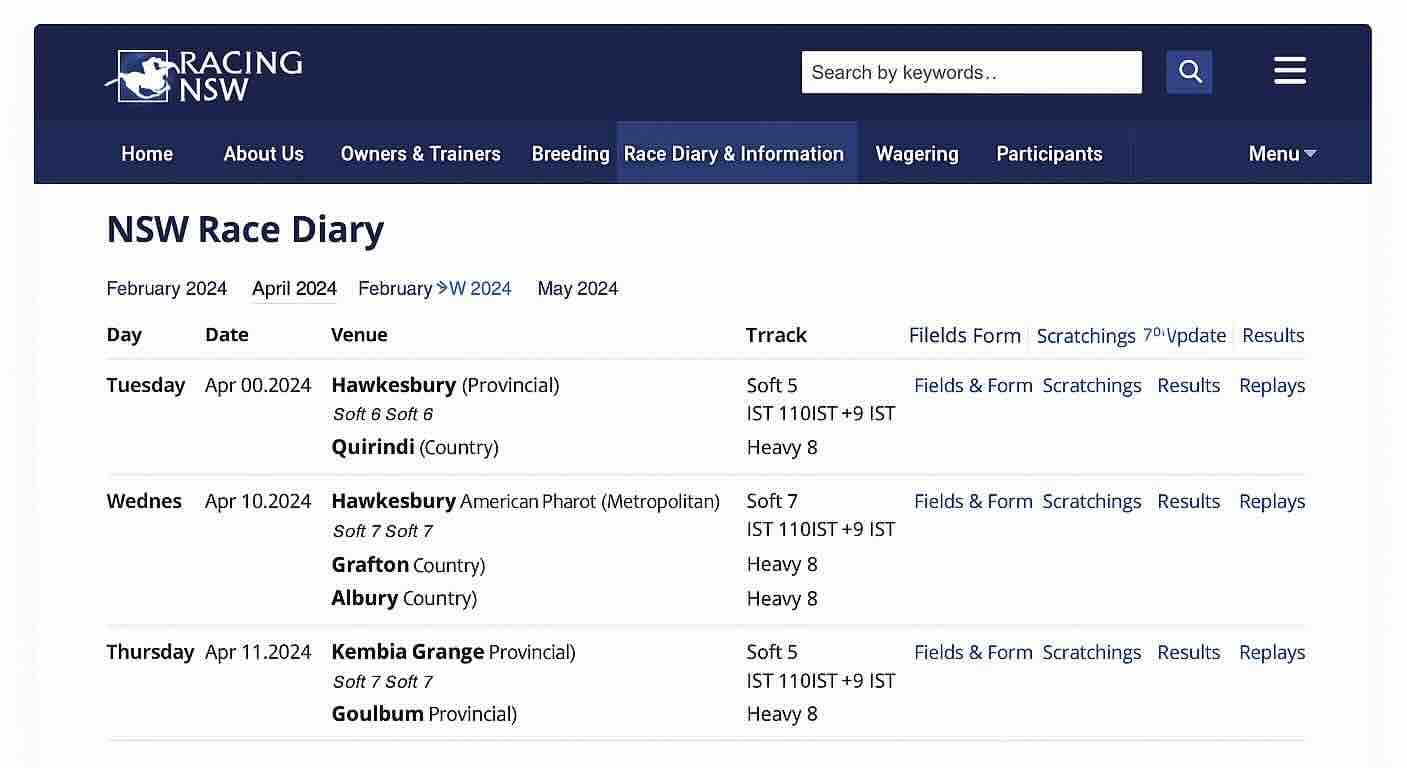
By aligning these data points, you can shortlist 2‑3 horses for a focused bet, such as a $5 each place or a small exacta box. To put the theory into practice, try applying this method with the 如何使用 Racing NSW 日记追踪即将到来的赛马 tool for real‑time selections.