Trainer‑Jockey Partnerships: How Consistent Pairings Influence Australian Race Outcomes
Published on June 13, 2026
Why stable trainer‑jockey partnerships matter: historical perspective
Trainer jockey partnerships Australian racing have long been a hidden driver of race outcomes. When a trainer and jockey develop a rhythm, they understand each other’s strengths, making tactical decisions smoother on the day. That consistency often translates into higher win percentages and tighter odds, giving punters an edge.
“Consistency is the secret sauce of success in racing.” – Anonymous
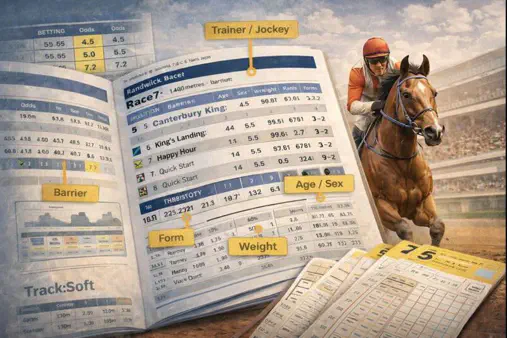
Understanding this synergy helps you move beyond isolated form guides. Early on, you’ll want to know how to read the race card to spot these duos. If you’re unsure where to start, check out Decoding the Race Card: A Beginner’s Guide to Reading Australian Race Forms for a quick refresher on the symbols that reveal trainer‑jockey combos.
Data sources for partnership stats – race forms, official databases, and Horise
Accurate numbers are the backbone of any analysis. The primary sources include:
- Race forms published each week, which list trainer and jockey together for every runner.
- Official databases such as Racing NSW and Racing Australia, offering downloadable CSVs of historical results.
- Third‑party platforms like Horise that aggregate partnership performance metrics.
Mid‑article, a practical tip: use the Racing NSW Diary to keep tabs on upcoming meetings. For a step‑by‑step guide, see How to Track Upcoming Races Using Racing NSW Diary.
Key performance metrics: win%, ROI, strike rate, average odds
When you pull the data, focus on these four numbers:
- Win% – the proportion of starts the duo finishes first.
- Return on Investment (ROI) – profit relative to stake, accounting for odds paid.
- Strike rate – finishes in the top three or four, indicating consistency.
- Average odds – shows whether the market undervalues the partnership.
These metrics let you spot “betting value trainer jockey” pairings that the market may overlook.
Case studies of top Australian duos and how they affect market odds
Below are three recent pairings that illustrate the principle.
| Trainer | Jockey | Win% | AvgOdds | Market Impact |
|---|---|---|---|---|
| Gai Waterhouse | James McDonald | 18% | 5.2 | Odds tighten early |
| Chris Waller | Blake Shinn | 15% | 6.0 | Slight undervaluation |
| Peter Moody | Damien Oliver | 13% | 4.8 | Consistent place finishes |
“When a trainer and jockey click, the numbers speak.” – Racing analyst
Notice how the market adjusts the odds as the partnership’s record builds. In each case, a punter partnership analysis can reveal where the odds lag behind performance.
Integrating partnership analysis into a betting workflow
To make the most of this insight, embed the metrics into your regular routine:
- Collect the latest partnership stats after each race day.
- Compare the numbers against current market odds.
- Identify mismatches where ROI suggests value.
- Place selective bets, tracking results for future refinement.
When you’re ready to formalise the process, the final step is to weave these figures into a systematic model. The guide on Building Your Own Horse Racing Betting Model with Historical Data walks you through turning raw stats into predictive formulas.
Tools and spreadsheets for tracking partnership trends
A simple spreadsheet can do the heavy lifting. Here are the essential columns you’ll need:
- Date of race
- Trainer name
- Jockey name
- Horse name
- Finish position
- Odds (decimal)
- Calculated ROI
Add conditional formatting to flag win% above 12% or ROI above 5%. Over time, you’ll develop a personal “punter partnership analysis” dashboard that highlights the most promising combos.
By treating trainer‑jockey partnerships as a separate analytical layer, you add depth to your betting strategy. Start gathering the data, apply the metrics, and watch your race selections improve. Happy racing!