Understanding the Weight‑for‑Age Scale in Australian Horse Racing
Published on January 24, 2026
What is the Weight‑for‑Age (WFA) system and its purpose in Australian racing
The weight for age scale australia is a set of standard weights that aim to level the playing field between horses of different ages, sexes, and race distances. By assigning each horse a weight that reflects its natural development, the system lets the best horse win on merit rather than on a handicap advantage.
If you’re new to reading race cards, start with Decoding the Race Card: A Beginner’s Guide to Reading Australian Race Forms. It shows you where the WFA figures appear on the form and how they relate to other race data.
“A solid grasp of the WFA scale is the foundation for any serious punter.” – Veteran Australian trainer
How WFA weights are calculated – age, sex, and distance factors
The calculation combines three main variables:
- Age – Younger horses receive a weight allowance that tapers as they mature.
- Sex – Fillies and mares usually get a slight reduction compared to colts and geldings.
- Distance – Longer races demand a higher base weight, reflecting stamina requirements.
| Age (years) | 1000m | 1400m | 1800m |
|---|---|---|---|
| 2 | 53kg | 55kg | 57kg |
| 3 | 56kg | 58kg | 60kg |
| 4+ | 58kg | 60kg | 62kg |
These figures are adjusted for sex (typically –1kg for fillies/mare) and any specific race conditions set by the racing authority.
Key differences between WFA races and handicap races
- Weight assignment: WFA uses a fixed scale; handicap assigns weights based on past performance.
- Goal: WFA aims to identify the truly best horse; handicap seeks a close finish.
- Betting impact: In handicaps, weight differences are often larger, leading to more volatile odds.
Interpreting WFA information on race cards and form guides
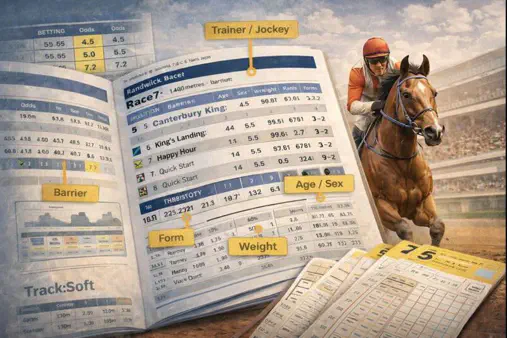
When you open a race card, look for the column titled “WFA”. It lists the standard weight each runner should carry. Compare this figure to the handicap column (if present) to see how much weight the horse is actually carrying.
Understanding the relationship between these numbers helps you answer the question how weight for age affects bets. A horse carrying less than its WFA weight in a handicap race may have a hidden advantage.
For a deeper dive into odds terminology, see How to Read Horse Racing Odds in Australia. It explains how to translate weight differences into potential value.
Using WFA data to spot undervalued horses and improve betting decisions
- Identify weight discounts – If a horse’s assigned weight is below the WFA figure, it may be underrated by the market.
- Check recent form – A horse that has performed well at a lower weight than its WFA suggests it can handle extra weight.
- Cross‑reference odds – When the odds don’t reflect the weight advantage, you may have found a value bet.
By incorporating the weight for age chart into your analysis, you gain an extra edge over bettors who rely solely on past performance.
“The smartest bettors treat the WFA scale as a hidden pricing model for each race.” – Experienced Australian punter
Real‑world case study: a recent WFA race analysis
In the Group2 Hill Stakes at Rosehill, the three‑year‑old colt “Speedy Flash” carried 55kg, 2kg under the WFA weight for his age, distance, and sex. The market odds listed him at $8.50, despite his recent form showing a win in a similar weight scenario.
By comparing the weight for age examples australia, we saw that most rivals were at or above their WFA weight, reducing their stamina margin. The analysis suggested a value bet on Speedy Flash, and he went on to win convincingly.
Applying the same steps to your next WFA race can help you spot similar opportunities. For further strategies on turning these insights into profit, explore Value Betting in Australian Horse Racing.