Weight Allowances in Australian Horse Racing: How Sex, Apprentice and Penalty Adjustments Affect Your Bets
Published on May 23, 2026
What weight allowances are and why they exist
Weight allowances are reductions applied to a horse’s assigned weight to level the playing field. In Australian horse racing, these allowances recognise differences in age, sex, apprenticeship status, and penalise horses that have performed well recently. The goal is to give every entrant a fair chance, which in turn creates tighter fields and more interesting races. As a bettor, understanding why a horse carries less weight can point you toward hidden value.
“A small weight difference can translate into a significant time gain over a mile.” – seasoned trainer
Break‑down of the three main allowance types in Australia
Australian race meetings typically use three categories of allowances:
- Sex allowances – Fillies and mares receive a standard reduction (usually 2kg) when racing against males.
- Apprentice (jockey) allowances – Apprentice riders get a weight break based on the number of wins they have accrued, ranging from 1kg to 3kg.
- Penalty allowances – Horses that have won recent races may incur extra weight (penalties) to balance their advantage.
| Allowance Type | Typical Reduction | When Applied |
|---|---|---|
| Sex | 2kg | Female horses vs. males |
| Apprentice | 1–3kg | Apprentice jockey with ≤20 wins |
| Penalty | +1–3kg | Recent win in same class |
These adjustments sit on top of the base handicap set by the racing authority.
How allowances are displayed on race cards and where to find the data
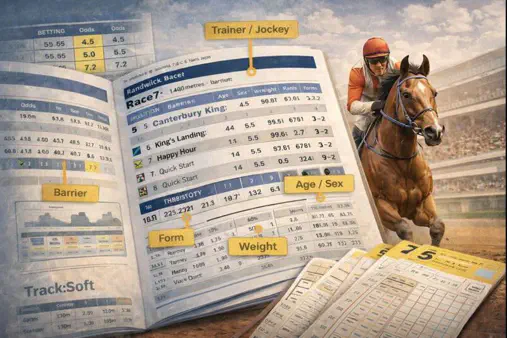
Race cards list each horse’s assigned weight followed by any allowance symbols. For example, you might see “56kg (F)”, where (F) indicates a female allowance. Apprentice riders are marked with “A” and the corresponding kilogram value, while penalties appear as “+2kg”.
If you’re new to reading race cards, check out Decoding the Race Card: A Beginner’s Guide to Reading Australian Race Forms for a quick walkthrough of each column.
Step‑by‑step examples of allowance calculations for a sample race
Let’s walk through a typical scenario:
- Base handicap assigned by the authority: 58kg.
- Sex allowance: The horse is a mare, so –2kg → 56kg.
- Apprentice allowance: The jockey has 12 wins, qualifying for a 2kg break → 54kg.
- Penalty: The horse won a race two weeks ago in the same class, adding +1kg → 55kg final weight.
So the starting weight of 58kg is adjusted down to 55kg after applying all relevant allowances and penalties. Knowing each step lets you compare the “true” weight a horse will carry against its rivals.
Betting strategies: spotting value and adjusting stakes based on allowances
When you see a horse benefiting from multiple allowances, especially a strong female or an apprentice with a low win count, its effective handicap may be more favorable than the odds suggest. Here’s how to act:
- Identify “over‑allowanced” horses – look for a mare with a strong recent form that also has an apprentice rider.
- Compare adjusted weights – subtract allowances from the listed weight to gauge the horse’s actual burden.
- Scale your stake – allocate a slightly larger portion of your betting unit to horses that carry significantly less weight than the field average, while keeping overall risk in check.
“Successful punters treat weight as a price modifier, adjusting their betting size the way they’d adjust a stake on odds.” – veteran handicapper
Tools and resources for tracking allowance trends
Staying up‑to‑date with allowance patterns can give you an edge. Consider these resources:
- Official racing forms – most include a “weight allowance” column refreshed daily.
- Handicap analysis software – many platforms let you filter by sex or apprentice status to spot trends.
- For deeper insight into how the broader handicap system interacts with allowances, read The Australian Handicap System Explained: How Weights Are Assigned and What It Means for Bettors.
Once you’ve mastered the data, finish your research with advanced betting tips from Value Betting in Australian Horse Racing. Those strategies will help you translate allowance knowledge into consistent profit.