Decoding Barrier Trials: A Punter’s Guide to Reading Australian Pre-Race Workouts and Form
Published on August 8, 2026
You’ve seen the trial day headlines: “Trainer X sends five to Warwick Farm,” or “Debutant shines in 1200m trial at Randwick.” But when the trial sheet drops—times, sectionals, gear changes, and all—you might still wonder: What does it actually mean?
Reading a barrier trial isn’t just about confirming a horse is fit enough to run. It’s about reading between the lines: how the horse moved, where it lost or gained ground, and whether it’s primed for the distance, track, or surface it faces next.
For beginners especially, trial data feels like a foreign language. The good news is—you don’t need to be a trainer to decode it. Let’s break it down, with illustrative Australian examples and practical steps you can use next time you’re checking form.
What Barrier Trials Are—and Why They Matter to Punters (Not Just Trainers)
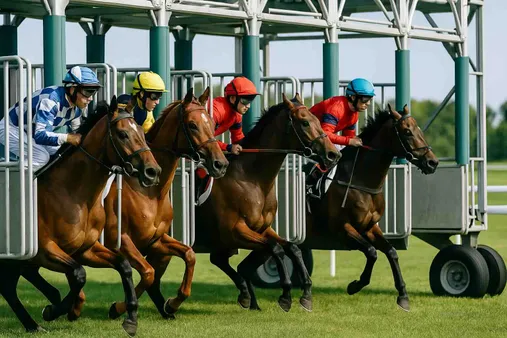
Barrier trials are controlled workouts, not races. Horses usually run in small fields (often 4–8) over set distances, timed in sectionals, and sometimes with official gear changes (e.g. blinkers added or removed). They’re run by trainers to test fitness, test tactics (e.g. early speed), or rebuild confidence after a layoff.
But for punters, trials are a form signal—a real-world indicator of recent work, especially when horses haven’t raced in 6–12 weeks, are debuting, or returning from a spell. Unlike official race form, trials show how a horse performs in a race-like setting: can it settle, does it respond to a ride, how does it handle the straight or turns?
A key distinction: trials don’t replace race form, but they fill gaps. When a horse’s last race was 8 months ago, its trial performance might be the most telling clue to its readiness.
“A trial is the best single window we have into a horse’s current state—more revealing than just looking at distance or track history. But only if you know how to read it.” — Senior Form Analyst, Sydney, 2026
Reading a Trial Sheet: Distance, Sectionals, Final Time, and How to Compare Across Meetings
Let’s walk through an illustrative example: Debutant Mighty Orbit (2YO, 1100m trial at Rosehill, 2026-10-28).
| Barrier | Distance | 300m | 600m | 900m | 1100m | Gap to 2nd | Gear |
|---|---|---|---|---|---|---|---|
| 5 | 1100m | 18.4 | 36.9 | 55.2 | 1:10.8 | +0.3s | Blinkers (new) |
- Distance: Must match your target race—e.g. a 1200m trial tells you little about stamina for a 1600m.
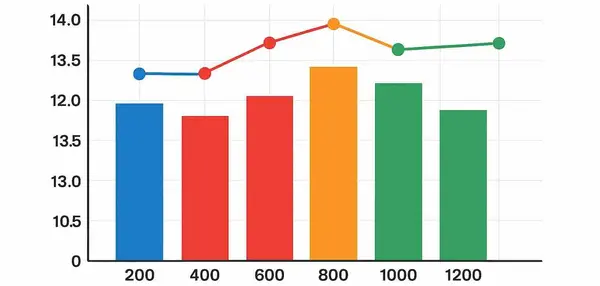
- Sectionals: The 300m (first split), 600m (half-way), etc., show where a horse built or lost ground. In Mighty Orbit’s case, a strong early 300m and steady 600–900m suggested controlled speed.
- Final time: Compare relative to others at the same meeting and distance—not to past races. Rosehill’s 1100m trial pace was 0.8s slower than track record pace (2025), which is normal for trials.
Here’s how to compare trials fairly:
- Same distance, same meeting: Direct comparison of final times and sectionals.
- Same distance, different meetings: Use the relative time—final time minus the meeting average for that distance. (e.g. if the average 1200m trial time at Caulfield this week was 1:11.9 and your horse ran 1:11.2, it was 0.7s faster than average.)
“Trials are context-rich—but only if you adjust for the meeting’s overall speed. A fast time on a slow day is misleading; a modest time on a fast day may hide genuine promise.” — Horise form team
What to Look For: Early Speed or a Late Finish, Stamina, and a Change of Surface
Watch for these patterns—they tell you more than just the final time.
Front-Runner or Late Finisher?
Does the horse want to lead or come from behind? In trial sheets, look at:
- First sectional time vs final time → if the horse led at 300m and stayed in touch, it’s likely a genuine speed type.
- Last 300m split vs first 300m → if it accelerated in the final third, it’s probably a closer with staying ability.
Example: Brisbane trial (2026-10-21): Highland Spirit ran its first 300m in 19.1 and its last 300m in 17.7, finishing the 1200m in 1:10.4—1.6s faster than the meeting’s average for the distance. Late acceleration and strong closing sectionals suggested fitness and potential over longer races.
Stamina
For longer races (1400m+), look for a horse that didn’t fade in the final 400m of a trial—its last 200m no slower than the 200m before it. In 2026, a few horses ran 1600m trials at Eagle Farm, and those that ran their final 400m in 24.0s or less did better than expected at their next starts.
A Change of Surface
Trial form on turf doesn’t always carry over to a synthetic track—or the other way round. In 2026, several horses trialled on Rosehill’s tighter inner track, and trainers noted they lost speed around the bends. Watch for:
- Slower final 400m on the turn-heavy trial track, vs race-day straight-line speed.
- Gear changes (e.g. blinkers added) often signal a surface-specific tweak—e.g. blinkers help horses focus on the front on tight tracks.
Common Pitfalls: Ignoring Weather, Track Bias, and Horse-Specific Context
Let’s flag 3 mistakes we still see even seasoned punters make.
| Pitfall | Why It Misleads | How to Adjust |
|---|---|---|
| Weather ignored | A 1.5s slowdown in a 1000m trial due to soft ground (e.g. Rosehill: track rating “Dead 6” that day) can mask a horse’s true ability. | Compare to other trials run on similar ratings, or check if the horse has win/place history on that condition. |
| Track bias overgeneralised | At Rosehill’s 2026 autumn meeting, the inner track favoured strong finishers (a slow early pace, then the closers won). A horse that finished last over 1000m but led at the 700m may simply have gone too early, not been poor. | Look at where it was at each split, not just where it finished. |
| Horse-specific context missed | A debutant may run poorly if it’s its first start since a 12-week spell; a 6-year-old returning from 6 months off may need two trials before racing sharp. | Check days since last race or spell. If >90 days, 2 trials are more telling than 1. |
And one more: ignoring gear changes. Blinkers added? That often means the trainer wants focus—or that the horse has been inconsistent in early runs. Blinkers removed? May signal a horse that doesn’t respond well to them, or a shift to a more patient ride.
How to Cross-Reference Trials with Recent Race Form (With Worked Example: BM64 at Canterbury)
Let’s test this with an illustrative BM64 at Canterbury (1400m, 2026-10-30). One runner, King’s Promise, had:
- Last start: 16th in a BM70 over 1500m at Randwick (2026-09-12), beaten 12.5 lengths.
- Previous trial (2026-10-14): 1300m at Rosehill, 6th of 9, 1.1s behind winner—but ran its final 400m in 24.2, against 25.8 for the field’s average, with blinkers added.
What the sheet hid:
- The 1300m trial was run on a Soft 5 track (slow pace), but the final 400m was the second fastest in the field.
- Canterbury’s 1400m has a strong finish bias this season—perfect for a horse that accelerates late.
Result: King’s Promise finished 2nd, at $7.50.
The key was combining trial how (accelerated late) with trial context (track condition, gear, trainer trend) — not just the raw result.
Use this 3-step cross-check:
- Where did it finish? vs Where was it at each split? (e.g. if it moved up in final 400m, it’s likely race-ready).
- How does the trial compare to the race distance & surface? (e.g. 1300m trial for 1400m race is fine; 1000m trial may not test stamina).
- What’s the trainer’s recent record with this combo? (e.g. trial + gear change + layoff).
Where to Find Reliable Trial Data in Australia (2026 State Sources and Timing Tips)
Most trial sheets appear 24–48 hours before the trial day. Here’s where to look in 2026:
| State | Source | Notes |
|---|---|---|
| NSW | Racing NSW Trials Page | Updated daily, with full field and split times (where available). Use “Filter by Track” for quick comparisons. |
| VIC | Victoria Racing Club Trial Reports | Includes gear changes, trainer comments, and video clips for some trials. |
| QLD | Queensland Racing Trials | Good notes on track conditions and trainer intentions. |
| WA, SA, TAS | State racing bodies (e.g. Racing and Wagering WA) | Less frequent updates, but trial sheets usually published by Friday for Saturday trials. |
Timing tip: Trials run 5–10 days before a major race meeting (e.g. Cox Plate, Golden Slipper) are highest-value. Trainers target specific races, so a trial at Flemington on 2026-10-22 (the lead-up to Melbourne Cup day) might be more telling than one run on a Tuesday.
Bonus: some stables post trial updates on social media, but always verify them with official sources.
Ready to try decoding the next trial sheet? Bookmark Insider Strategies: Mastering Barrier Trials for Smarter Form Study for a quick checklist—and when you’re ready to turn those trial times into real-value metrics, Master Horse Racing Speed Maps to Improve and Maximise Your Speed Ratings shows how to quantify what you’ve just learned. And if you’re curious how sectionals work in races (not just trials), this deep dive on Unlocking Winning Edge with Sectional Times in Horse Racing ties it together.