Pace Scenario Building When Data Is Missing: Debutants, Resumers and Gear Changes
Published on September 5, 2026
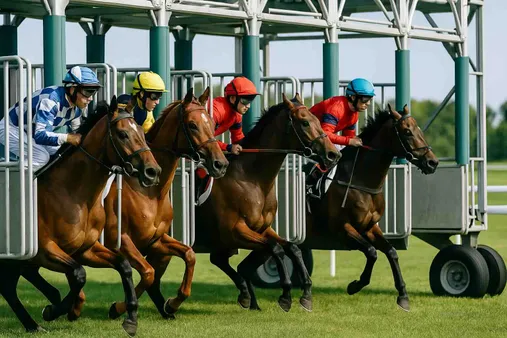
Most races have one or two runners that don’t fit neatly into your pace map. A horse having its first start. A horse back from a long break. A horse wearing blinkers for the first time. Pace scenario building is how you deal with those gaps. You don’t pretend you know how the unknown runner will race. You work out the likely options and see what each one does to the rest of the field.
This matters more than it sounds. One extra horse on the speed can turn a soft lead into a genuine tempo. One horse that misses the start can hand the leader an easy time in front. If you skip the unknowns, your read of the race dynamics can be wrong before the gates even open.
So let’s look at where the gaps usually come from, how to fill them sensibly, and how to turn a few rough scenarios into a better betting decision.
Why One Unknown Runner Can Change the Whole Race
A pace map is only as good as the run styles behind it. If you already know the basics of leaders, on-pace runners and backmarkers, you’re halfway there. If you’d like a refresher, our post on Race Pacing Styles Demystified: How Front‑Runners, Stalkers and Closers Influence Australian Bets covers those roles in plain terms.
The trouble is that pace is about interaction. A front-runner’s chances don’t depend only on its own ability. They depend on whether anyone else wants the lead. That’s why a single question mark in the field can matter as much as the favourite.
Picture a race where one horse looks like the only natural leader. On paper, it gets a soft run in front. Now add a first starter drawn just inside it, with no race form at all. If that newcomer has shown early speed in its trials, the soft lead might not be so soft. Your whole pace prediction hinges on a horse you’ve never seen race.
As old punters like to say, “Find the leader and you’ll find the shape of the race.”
The Four Usual Gaps in the Form
Missing data rarely means a blank race card. It usually means one or two runners whose recent form doesn’t tell you how they’ll race today. Here are the four you’ll meet most often.
First Starters
A debutant has no race form, so it has no run style on record. What you do have is its barrier trials, and sometimes a trial replay. Trials aren’t races. The tempo can be gentle, and riders often aren’t asking for everything. But they’re the best clue to how a horse leaves the gates and where it’s happy to settle. Our guide on Using Barrier Trials in Form Study goes through what to look for in a trial and how to weigh it.
Focus on position, not the finishing order. A horse that jumped cleanly and sat outside the leader in two trials is telling you something about its early speed. A horse that was slowly away both times is telling you something too.
Resumers After a Spell
A horse running first-up, meaning its first start back from a break, has form, but that form might be months old. It may have led in its last campaign, but trainers and jockeys don’t always ride a resuming horse the same way. Some get ridden quietly to find their feet. Others are fit and ready to roll forward.
Look at how the horse raced first-up in previous campaigns, if it has them. That’s usually a better guide than its last run before the spell.
Gear Changes
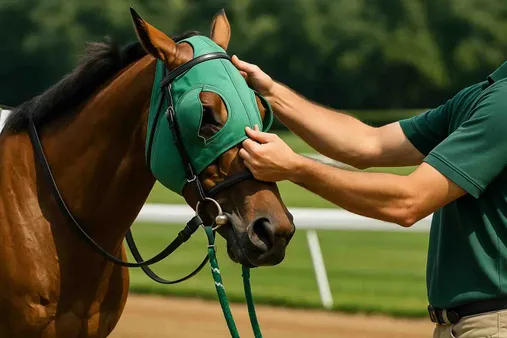
Gear changes are listed with the race fields, and some of them are directly about racing manners. Blinkers in particular are often used to help a horse concentrate, and that can make it sharper early. It can also make a horse race keener than before. Either way, the run style in the form guide may no longer apply. For a closer look at what each piece of gear is meant to fix, see our Gear Changes Guide: Blinkers, Tongue-Ties & Lugging Bits.
Big Changes in Distance or Class
A horse dropping back from 1600m to 1100m might find itself further back than usual, because the shorter race is run quicker early. A horse stepping up in trip might suddenly find itself closer to the speed. The same goes for a horse coming from a different state or a much weaker grade. Its past positions are real, but they were earned in different races.
Building a Pace Scenario Around the Gaps
Once you’ve spotted the unknown runners, you can build your scenarios in a simple order. Start with what you’re sure of and leave the guesswork for last.
- Map the known runners first. Put every horse with clear, recent form into its likely position: leader, on the pace, midfield or back.
- Give each unknown a range, not a spot. Instead of deciding the debutant will lead, note that it could be anywhere from on the pace to midfield, based on its trials.
- Write out two or three scenarios. One where the unknowns go forward, one where they don’t, and one in between if it makes a real difference.
- Check how the barrier changes things. An unknown with early speed drawn inside a known leader is a bigger threat to that leader than one drawn wide.
- Find the horses that suit most scenarios. A runner that only wins if everything falls its way is fragile. A runner that has a chance in two of your three scenarios is sturdier.
That last step is where the work pays off. You’re not trying to predict the race exactly. You’re trying to find out which horses depend on one particular pace scenario and which don’t.
A Worked Example: A Maiden With Three Question Marks
Let’s run through a made-up example so you can see the method at work. It’s a nine-horse maiden over 1200m.
Here’s what we know from the form guide:
Horse 1, barrier 3, has led in both its starts and was run down late each time. Horse 2, barrier 7, has settled midfield and run on in its three starts. Four other runners have settled near the back in all their starts.
And here are the three gaps:
Horse 4, barrier 2, is a first starter. It has two trials and jumped well both times, sitting outside the leader. Horse 5, barrier 8, is resuming after a spell. In its last campaign it raced on the speed. Horse 6, barrier 5, has settled midfield in its starts but wears blinkers for the first time today.
Now we build the scenarios.
Scenario A: the unknowns go forward. Horse 4 brings its trial speed to the race and goes with Horse 1 from the inside. Horse 5 tries to cross from barrier 8 and ends up outside them. With two or three horses pressing, the tempo is genuine. That sets the race up for a runner like Horse 2, which can sit back and run on.
Scenario B: the unknowns stay back. Horse 4 is green on debut and gets away slowly. Horse 5 is ridden quietly first-up from the wide draw. Horse 1 leads on its own at a steady tempo. That’s the setup it has been missing, and it becomes hard to catch.
Scenario C: the blinkers wake Horse 6 up. It begins sharper than usual and ends up one off the fence, close to the lead. The tempo sits somewhere between A and B, and Horse 1 has company but not a full-on battle.
What does this tell you? Horse 1 needs Scenario B. Horse 2 does best in Scenario A and is still in it under C, as long as the leaders don’t get away from it. Nobody can promise you which scenario happens, but you now know exactly what each horse needs, and you can price them with that in mind.
As jockeys often put it, “A horse settles where its first few strides take it, not where the form guide says it should.”
Common Mistakes When the Data Is Thin
Thin data makes it easy to fall into a few traps. These are the ones to watch for.
- Treating a trial win as proof of early speed. A horse can win a trial from the back. Look at where it settled, not where it finished.
- Assuming a resumer will race exactly as it did before the spell. First-up rides are often more conservative, and the horse may not be fully fit.
- Ignoring the gear change because the form looks settled. If blinkers go on, the run style you’ve noted may already be out of date.
- Building only one scenario. If your bet only works in one version of the race, you’re relying on luck more than you think.
- Letting the unknowns cancel themselves out. Three question marks don’t mean an average tempo. Work through each one, because they rarely all do the same thing.
Turning Scenarios Into Betting Decisions
Pace scenarios become useful when you lay them next to the market. Ask yourself which scenario the prices seem to assume.
In our example, say Horse 1 is a $2.60 favourite. That price looks like it assumes Scenario B, where Horse 1 leads alone. But you’ve found two realistic ways the race could be run with more pressure on it. If you think Scenarios A and C are just as likely as B, then $2.60 may be too short, and Horse 2 at a bigger price might be the better bet.
It works the other way too. If the trials suggest the debutant is likely to be slow away, and the resumer’s past first-up runs were quiet, Scenario B gets stronger. Then the favourite’s price may be fair.
This fits neatly into the rest of your form guide analysis. Do your usual work on ability, fitness and conditions first. Then use pace scenario building as a second filter. It helps you spot horses whose chances depend heavily on one version of the race, and horses the market may be underrating because their best scenario isn’t the obvious one.
Next time you open a race card and see a first starter, a resumer or a blinkers note, don’t skip past it. Give that runner a range, sketch out two or three scenarios, and see whether your top pick still stands up. It takes a few extra minutes per race, and it can make what looks like guesswork feel a lot clearer.